
Ventures / Portfolio & Thesis
UMKM Southeast Asia.
Indonesia has 64 million UMKMs, micro, small, and medium enterprises, contributing roughly 61% of national GDP. Only in 2025 did digital-tool adoption among UMKMs cross 63%. The next generation of Southeast Asian technology companies will be built for and with these operators, not against them. Sprout Ventures' UMKM thesis is that the operator-respectful platforms (zero-commission, WhatsApp-wired, mobile-first, financial-tools-native) will compound where the extractive ones will stall.
The biggest digital-economy opportunity in SEA runs through small businesses
Indonesia's digital economy is often framed as a consumer story, the 270-million-person mobile internet market. But the operator layer underneath, the 64 million UMKMs, is the part that actually moves the GDP number and the part where digital platforms have extracted more value than they've returned for most of the last decade. A structural shift is underway. Zero-commission models (like Toco) are winning distribution against 5–15% commission incumbents. WhatsApp-native operational flows are beating app-first flows for small-business UX. Government-backed digital programs (MIKIO, Bangga Buatan Indonesia, SATU DATA UMKM, LPDP) are funding the infrastructure. Sprout Ventures' UMKM thesis sits on this shift.
The UMKM economy map
A three-layer economy diagram: the 64-million-UMKM base rendered as an Indonesian density map; the middle band of serving platforms (commerce, financial services, distribution, B2B marketplaces) tagged by economics model; and a bottom layer of government and policy infrastructure (MIKIO, BPJPH, SATU DATA UMKM, OJK). Arrows of capital and value flow show where the operator-respectful platforms compound. Coming soon.
How we pick UMKM ventures to engage with
Four principles that shape which UMKM-serving ventures make Sprout's thesis and which don't.
Respect the operator
The platforms that compound in this segment don't extract 10–15% commission from a warung owner's already-thin margin. They find alternative economics, subscription, financial services attach, ads, wholesale, that grow with the operator rather than tax them. Ventures that start extractive rarely unlearn it. We look for founders who start respectful.
WhatsApp-native is non-negotiable
An UMKM-serving platform that requires operators to install a new app and learn a new UX will lose to one that meets them on WhatsApp. Content, catalog management, order flow, payment, support: whatever can live on WhatsApp, should. We invest where founders understand this.
Mobile-first beyond aesthetics
Mobile-first for UMKMs means offline-tolerant, low-bandwidth-tolerant, mid-tier-Android-tolerant. It means the app works in a mall basement and a rural village. Not a responsive design. An architectural commitment.
Government + compliance alignment
MIKIO, BPJPH halal cert, OJK fintech licensing, SATU DATA UMKM: Indonesian UMKM-serving platforms don't exist outside the policy surface. We back ventures that treat the government and regulator relationship as a design input, not a legal afterthought.
Where the thesis meets product
Four venture patterns we back in the UMKM thesis area.
Zero-Commission Marketplaces
Marketplaces that flip the commission-extraction model. Monetization comes from financial services, wholesale, ads, or subscription, not from taxing every transaction the UMKM executes. Toco is the Sprout-co-built flagship.
UMKM Financial Infrastructure
Credit, payments, insurance, and working-capital tools designed for micro- and small-businesses operating cash-light, often below formal-credit thresholds. Usually requires creative risk modeling and alternative data.
Distribution & Supply Chain Platforms
Logistics and wholesale discovery platforms for UMKMs sourcing inventory, distributing products, and connecting to larger distribution networks. Platforms that shorten supply chains and reduce working-capital requirements.
Vertical UMKM Software
Industry-specific tools for UMKMs, bookkeeping, POS, CRM, commerce, designed for a specific sector (warung, salon, pharmacy, agricultural cooperative). Vertical depth wins where horizontal breadth competes with enterprise tooling.
UMKM thesis in action
The proof the thesis is landing, in Sprout's portfolio and across the broader market.
150k+ sellers in three weeks: the zero-commission model lands
A Sprout-co-built zero-commission UMKM marketplace onboarded 150,000+ sellers in its first three weeks of public launch (June 2025). Operator-respectful monetization, WhatsApp-wired flows, mobile-first UX. Proof that the UMKM thesis lands when the product decisions align with operator reality.
64 million UMKMs, 61% of GDP, 63% already using digital tools
Indonesia's 64 million UMKMs contribute approximately 61% of national GDP, and digital-tool adoption among UMKMs crossed 63% in 2025, a dramatic shift from pre-pandemic baselines. This is the largest addressable operator segment in Southeast Asia's digital economy, by a significant margin.
Indonesia's B2B e-commerce market forecast to double by 2030
Indonesia's B2B e-commerce segment, the part of the e-commerce market built for operators rather than consumers, is forecast to approximately double between 2025 and 2030 at an 18.74% CAGR. UMKM-serving platforms that capture even a sliver of this growth compound materially.
What's trending in UMKM digital
View all insights →
Mid-Level UMKM: Cracking the Market with Industry Insight and Vertical AI
Discover why targeting the Mid-Level UMKM in Southeast Asia requires operator-respectful platforms, Vertical AI, and a proven portfolio of production-ready technology.
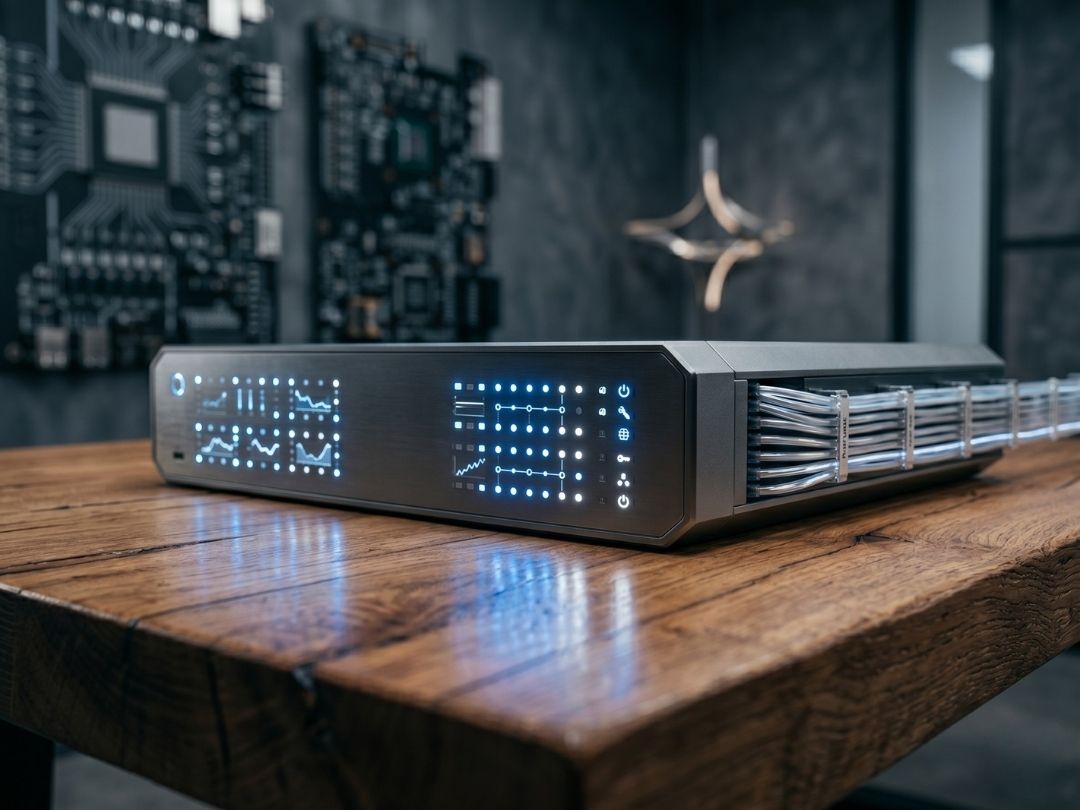
Data Infrastructure: The Essential Checklist Before Building AI for Conventional Businesses
Discover why conventional businesses in Southeast Asia must build a solid Data Infrastructure before investing in Vertical AI, featuring actionable insights for UMKM operators.
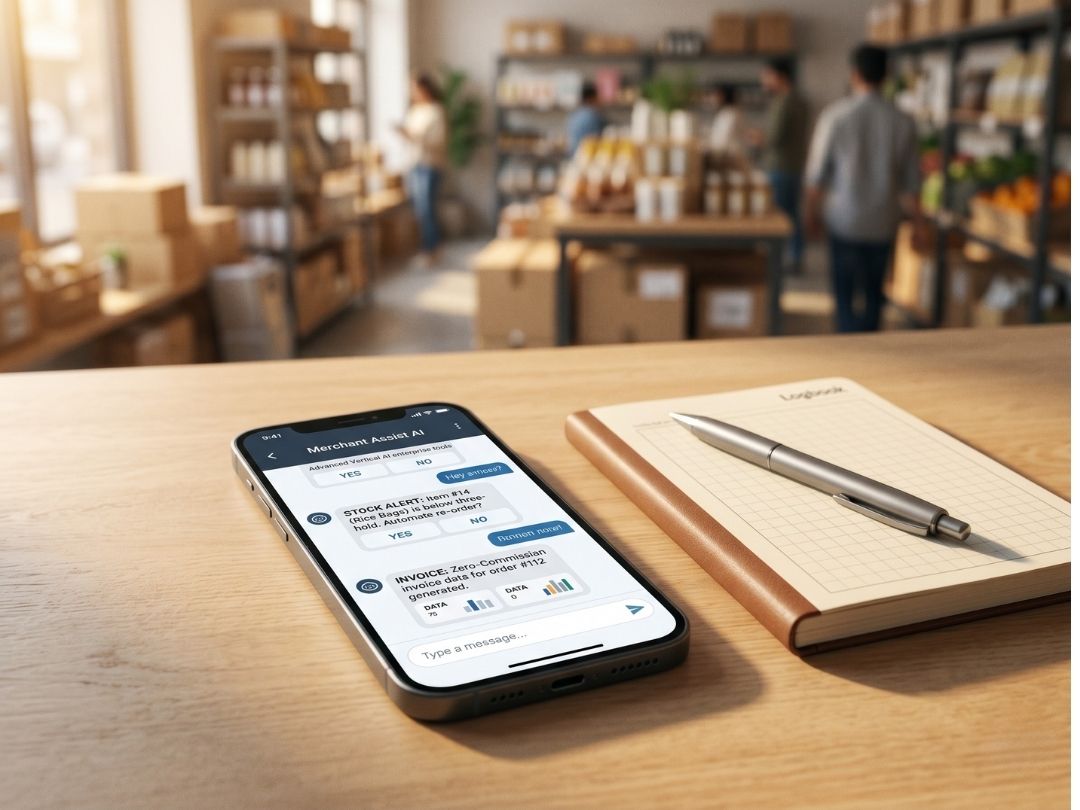
WhatsApp Wired Business: Managing Operations as Smart as a Corporate Enterprise
Discover how Southeast Asian UMKMs can use Vertical AI embedded directly into chat apps to automate orders, manage logistics, and scale without expensive new tools.
Building something that serves UMKMs?
Tell us about the venture: the operator segment, the problem, the product. If it's thesis-aligned and the economics respect the operator, we'll scope an engagement: co-build, technical cofounder, or augmented team. Worst case, an honest no. Best case, a venture on this thesis gets the product-engineering depth to compound rather than stall.
Start a project